Kai Schmidt · 10 September 2026
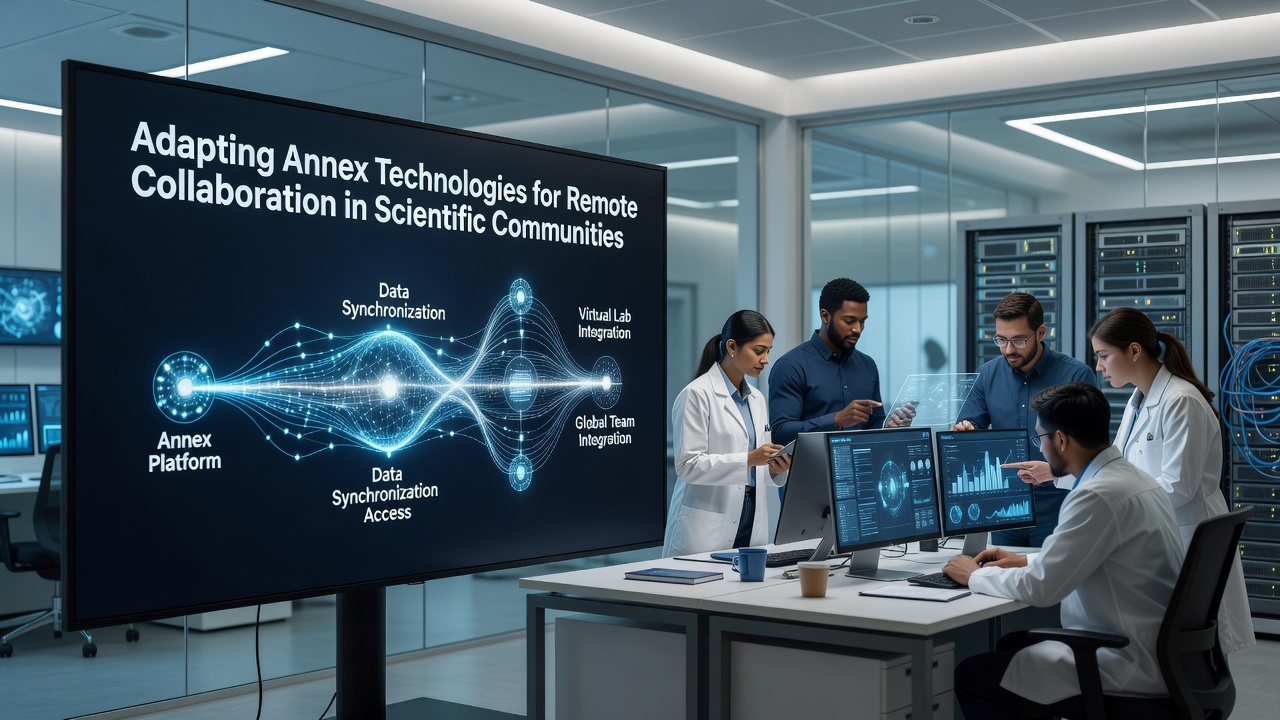
Adapting Annex Technologies for Remote Collaboration in Scientific Communities
Annex technologies encompass a suite of tools designed for secure data exchange, virtual modeling, and synchronized analysis that scientific teams have begun integrating into daily workflows. These systems emerged from earlier enterprise platforms yet evolved through targeted modifications that address the unique demands of research environments where precision and reproducibility remain paramount. Data from multiple institutions shows that adoption rates climbed steadily after 2023 as laboratories sought reliable alternatives to fragmented communication channels.
Core Components Driving Adaptation
Annex platforms combine encrypted repositories with real-time annotation layers that permit multiple users to interact with experimental datasets without altering original files, and researchers at facilities across North America and Europe report that this architecture reduces version conflicts by measurable margins. Integration with existing laboratory information management systems occurs through standardized APIs that preserve compliance with regulatory frameworks such as those maintained by the National Institutes of Health and the European Research Council. Teams that implemented these connections observed faster turnaround times for cross-institutional reviews because annotations appear simultaneously on every connected workstation.
Implementation Patterns Across Disciplines
Biologists working on genomic sequencing projects adapted Annex modules to handle large FASTQ files by adding compression routines that maintain integrity during transfer, while physicists studying particle interactions configured the same base technology to support high-resolution simulation outputs. The Australian Research Council documented several funded initiatives in 2025 where remote teams coordinated telescope data streams through these adapted environments, noting that synchronization occurred without the latency spikes that previously disrupted observations. Chemists followed a similar path by layering molecular visualization plugins onto Annex cores, allowing distributed groups to rotate three-dimensional models in shared sessions that update instantly for all participants.
Security and Compliance Adjustments
Security protocols within Annex systems received updates that align with international standards for handling sensitive human-subject information, and institutions in Canada have incorporated additional audit trails that log every access event down to the keystroke level. These modifications satisfy requirements from bodies such as the Canadian Institutes of Health Research without introducing noticeable delays in collaborative sessions. Encryption keys rotate automatically at intervals determined by institutional policy, which keeps data protected even when researchers connect from varied network environments around the globe.
Training and Adoption Curves
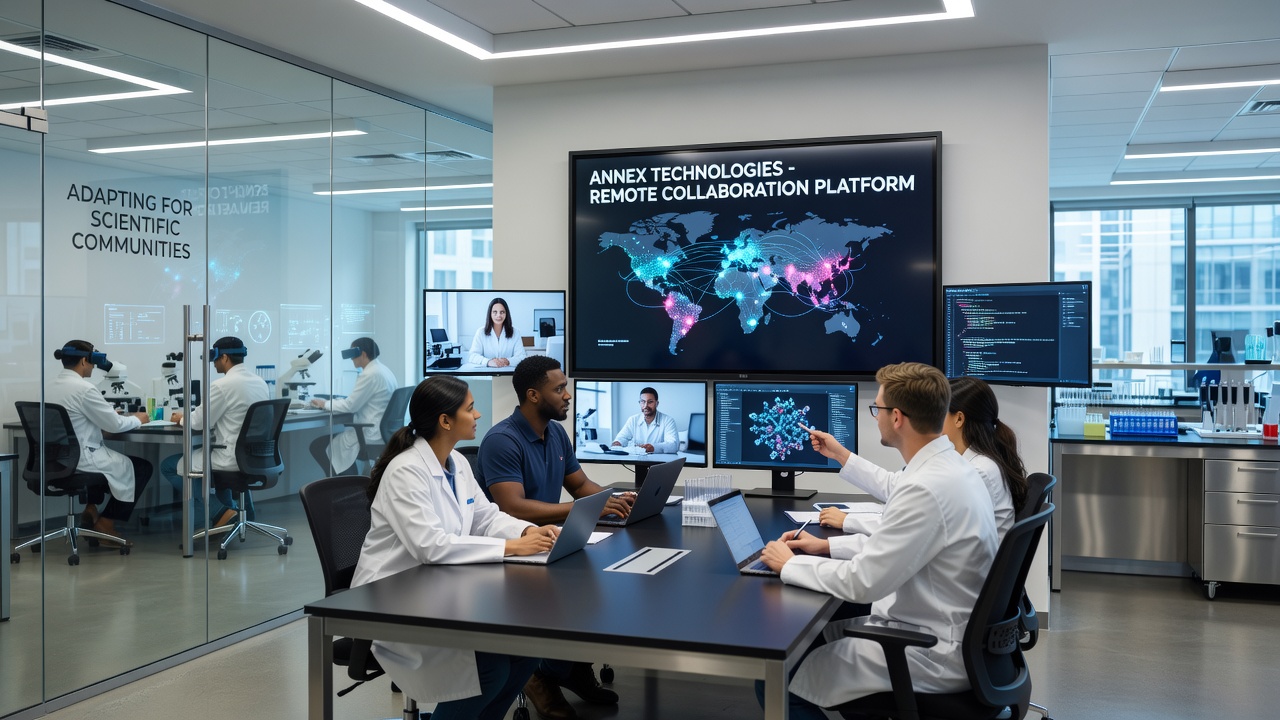
Workshops organized by university consortia teach scientists to configure Annex tools for specific experiment types, and attendance figures from sessions held in early 2026 indicate growing interest ahead of larger gatherings scheduled for September 2026. Participants learn to establish permission hierarchies that mirror traditional lab roles while enabling external collaborators to contribute without full system access. Case studies presented during these workshops highlight how one genomics network reduced its reliance on physical sample shipments by 60 percent after full deployment of the adapted platform.
Future Developments and Integration Outlook
Developers continue refining Annex interfaces to incorporate emerging standards for artificial intelligence-assisted analysis, allowing models trained on one dataset to process inputs from partner institutions without manual reformatting. Observers tracking these updates note that compatibility testing with quantum-resistant algorithms has already begun at several national laboratories. By September 2026 several major conferences plan to feature live demonstrations of these next-stage adaptations, providing hands-on opportunities for research groups still evaluating the transition.
Conclusion
Annex technologies now serve as foundational infrastructure for many remote scientific collaborations because their modular design accommodates discipline-specific requirements while preserving core security and synchronization features. Continued refinement through institutional feedback loops ensures the systems keep pace with evolving research practices and regulatory expectations. Teams that complete the adaptation process gain reliable pathways for joint experimentation that transcend geographic boundaries and support reproducible outcomes across distributed networks.